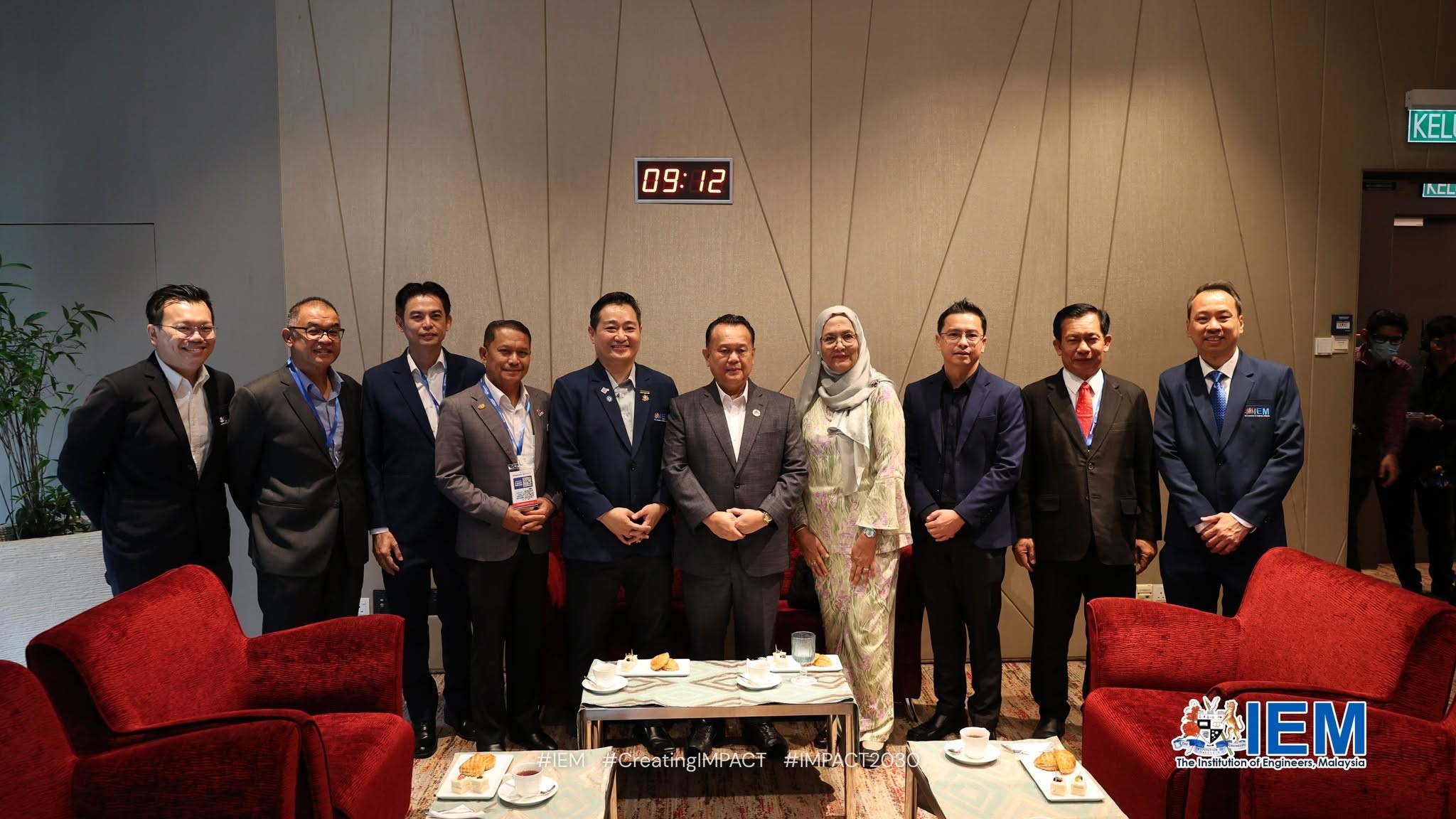
Ir. Prof. Dr. Tan Chee Fai, Vice President of the Institution of Engineers Malaysia, conducted this exclusive interview with Prof. Gong Ke for JURUTERA magazine. The conversation highlights Prof. Gong’s insights into the transformative role of AI in engineering, ethics, and sustainable development across global and ASEAN contexts.
Artificial Intelligence (AI) is redefining engineering by shifting the profession from traditional technical roles to strategic leadership in sustainability and innovation. As part of the 4th Industrial Revolution, AI enables predictive maintenance, smart infrastructure, and real-time optimisation across sectors such as manufacturing, urban planning, agriculture, and healthcare. It provides developing nations, especially in Asia and the Global South, with opportunities to leapfrog into advanced industrial capabilities.
Strategically aligning AI with the UN Sustainable Development Goals (SDGs) allows engineers to apply technology for social good, improving energy efficiency, reducing waste, and expanding access to critical services. Key initiatives include AI-powered digital twins for urban resilience, smart agriculture platforms for food security, and ethical AI applications in public service delivery.
However, the transformative potential of AI must be balanced with strong ethical governance. Fairness, transparency, accountability, and data privacy must be embedded into AI-driven engineering practices to avoid reinforcing bias or deepening inequality. Engineering education, there, needs urgent reform, focusing on AI literacy, interdisciplinary collaboration, and responsible innovation.
International engineering bodies play a pivotal role in bridging the digital divide through capacity-building, global standards harmonisation, and cross-border knowledge exchange. With ethical leadership and inclusive innovation, engineers can harness AI as a catalyst for a more equitable and sustainable global future.
Transforming the Profession
From a global perspective, how is artificial intelligence (AI) redefining the role of engineers in shaping tomorrow’s society and industries?
AI is reshaping engineering by augmenting human capabilities and automating routine tasks. Historically, engineers transitioned from craftsmen to operators of mechanical, electrical, and digital systems during the successive industrial revolutions. Today, AI fuels the 4th Industrial Revolution (4IR), merging physical digital, and biological systems.
In manufacturing, AI enables predictive maintenance such as engine diagnostics (Rolls-Royce) while tools like GitHub Copilot automate routine coding, allowing engineers to focus on innovation and system architecture. This mirrors earlier shifts where engineers delegated manual work to machines.
For Asia and the Global South, AI offers leapfrogging path toward industrial competitiveness. China’s Belt & Road Initiative uses AI-powered digital twins to plan and manage infrastructure. Singapore’s Virtual Singapore models climate resilience for smart urban planning. Indonesia’s Gojek applies AI to optimise transportation and logistics in real time.
These examples highlight how engineers are evolving from implementers to strategic leaders – driving sustainable, tech-enabled development.
Read the full article here:
IEM Web Portal for download:
https://www.myiem.org.my/content/iem_bulletin_2025-1223.aspx
Or read it online here:
https://issuu.com/the_institution_of_engineers_malaysia/docs/myiem_jurutera_e-bulletin_-_july_2025




![Small modular reactors (SMRs) process [17]](https://iemjurutera.my/wp-content/uploads/2024/11/How_Do_SMRs_Work_Infographic_Crop.png)